
An invisible brace is a modern and highly popular option for orthodontic treatment that is discreet, but still works. In this type of treatment plan, the dentist first performs a detailed examination of your teeth. Depending on your case, we may require X-rays, CBCT, a lateral cephalogram and a 3D digital impression — all of which are available in-house at Zen Dental Studio. So, walk into our clinic, if you have been looking for the ‘best dentist near me’.
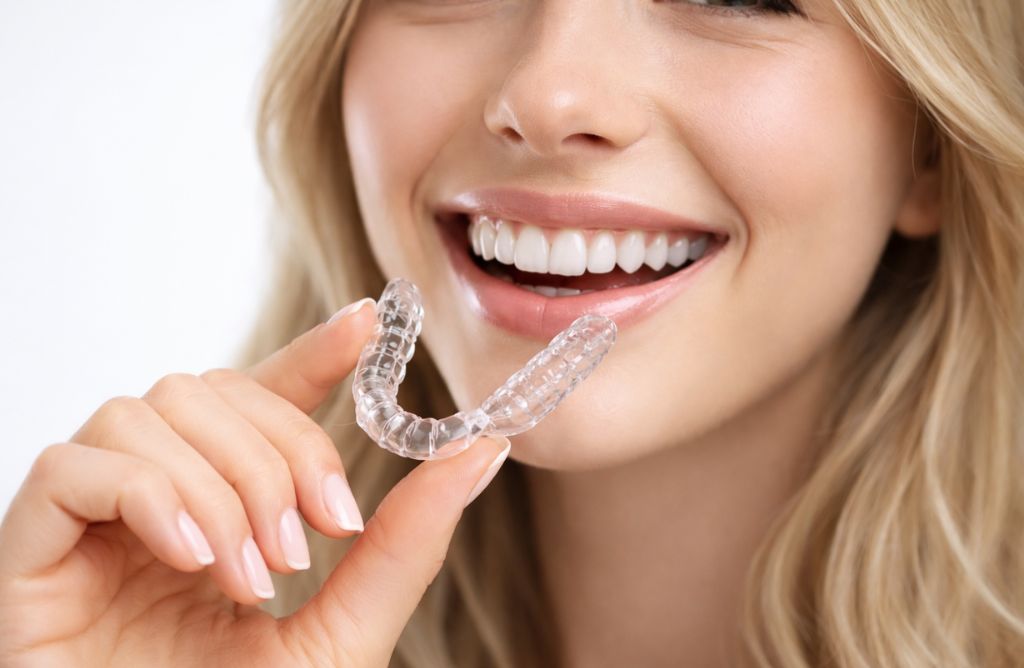
Next, a clear tray or aligner is used to gently guide your teeth into the desired position. These trays are custom-made to fit perfectly and remain nearly invisible while wearing them. The trays used are BPA-free, FDA-approved and are gluten and latex-free, ensuring safety and comfort.
After you begin wearing the customised clear teeth aligners, follow-up visits become important- a monthly check-up is always recommended to monitor progress. For best results, individuals must wear the aligners for at least 22 hours a day. Water can be consumed while wearing aligners, but they must be removed before eating or drinking anything else.
Clear aligners are designed to correct a wide range of orthodontic concerns including crowding, spacing between teeth, open bites, crossbites, underbites and overbites.
Advantages of Clear Aligners Over Traditional Braces-
Clear aligner therapy offers a level of convenience and comfort that traditional braces cannot match. One key advantage is the absence of food restrictions. Because the aligners are removable, patients can enjoy their normal diet without the concern of damaging wires or brackets.
Oral hygiene is significantly easier to maintain during aligner treatment. With minimal attachments and the freedom to remove the trays for brushing and flossing, patients can preserve optimal gum and tooth health throughout their orthodontic journey.
Comfort is another important benefit. Clear aligners have smooth, custom-fitted surfaces and eliminate the constant friction caused by metal brackets and wires. This greatly reduces the likelihood of soft tissue irritation, poking and mouth ulcers – making the experience more pleasant day to day.
Limitations of Clear Aligners-
While clear aligners are highly advanced, they may not always be the preferred choice in very complex or severe orthodontic cases, where traditional braces can sometimes provide greater mechanical control.
Successful aligner treatment also depends heavily on patient commitment. Aligners must be worn consistently as prescribed. Without proper discipline, subsequent trays may not seat correctly, potentially extending treatment time. Motivation and adherence are essential to achieving predictable, high-quality results.
Traditional braces, on the other hand, remain fixed on the teeth, which gives the orthodontist continuous mechanical control over tooth movement. Because braces are bonded in place, treatment does not depend on daily patient compliance in the same way aligners do. However, they require a higher level of attention to oral hygiene. Special cleaning techniques and professional dental maintenance may be recommended more frequently during treatment.
Certain dietary adjustments are also necessary with braces. Sticky, hard, or very chewy foods should be avoided, as they can damage brackets or wires. Some patients experience temporary soreness after braces are placed or adjusted, but this settles as the mouth adapts. Once past the initial adjustment phase, most individuals function comfortably and continue treatment with minimal disruption to daily life.
A personalised consultation is the best way to determine which system will provide the safest, most efficient, and most aesthetic outcome for your specific case.
Conclusion
Orthodontic treatment is not only about achieving a beautiful smile — it is an investment in long-term oral health. Properly aligned teeth are easier to clean, function more efficiently and place less strain on the jaw and supporting structures. Over time, this reduces the risk of excessive wear, gum problems, and avoidable dental complications.
Whether clear aligners or traditional braces are more suitable depends on the complexity of your case, your lifestyle, and your treatment goals. There is no one-size-fits-all solution in modern orthodontics. A carefully planned, personalised approach ensures that both health and aesthetics are addressed in a balanced way.
A professional consultation allows us to evaluate your bite, alignment and overall dental health, so we can recommend a treatment that is safe, predictable and designed for lasting results. When chosen thoughtfully, orthodontic care enhances not only your smile, but your confidence and quality of life for years to come.
Frequently Asked Questions
Finding the best dentist near you starts with trusted recommendations from family, friends, or your primary care provider. Online reviews and ratings can offer insight into patient experiences, office atmosphere and quality of care. Look for a licensed professional with clear credentials, modern technology, and a team that communicates openly. A welcoming environment and a dentist who listens to your concerns can make every visit more comfortable and productive.
When searching for a pediatric dentist, choose someone trained in children’s oral health and experienced in working with infants, children, and teens. A child-friendly office, gentle approach and focus on preventive care are important. Pediatric dentists are skilled at helping young patients feel calm while teaching healthy habits that last a lifetime.
If you’re exploring alternatives to traditional braces, options include clear aligners, ceramic braces, and lingual braces that sit behind the teeth. Clear aligners are removable trays custom-made to shift teeth gradually into place. They are discreet and allow you to eat and brush without wires or brackets.
Clear teeth aligners work by applying steady, controlled pressure to specific teeth. You’ll wear each set of aligners for about one to two weeks before moving to the next, guiding teeth into alignment over time.
Invisible teeth straightening options can be effective for teens and adults with mild to moderate alignment concerns. A consultation with a qualified dental professional will determine the best treatment for your smile and long-term oral health.