Biomimetic dentistry

Redefining Dental Care with Nature-Inspired Precision

Looking for a Biomimetic Dentist Near Me in Nallagandla, Hyderabad? At Zen Dental Studio, we restore decayed or broken teeth  by preserving as much natural tooth structure as possible while recreating the strength, appearance, and function of a healthy natural tooth. Our clinic in Nallagandla, Hyderabad offers precise, long-lasting, and minimally invasive dental solutions. Using advanced adhesive techniques, scientifically proven materials, and precise digital planning, our restorations seal, protect, and support the tooth allowing it to function naturally and last longer. Our goal is not just to fix teeth, but to restore them in harmony with nature.
How We Carry Out Biomimetic Procedures

At Zen Dental Studio, biomimetic restorations are performed using a meticulous, step-by-step protocol that rebuilds the tooth from the inside out just like nature intended.
 
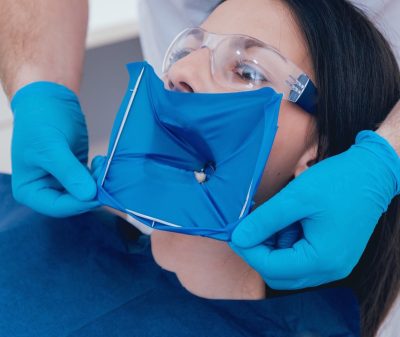
Step 1: Complete Tooth Isolation

Step 1: Complete Tooth Isolation

All modern bonding materials used in biomimetic dentistry are extremely moisture-sensitive.
•Even minimal saliva or fluid contamination can compromise the bond and shorten the life of the restoration.
•A rubber dam is therefore non-negotiable  it creates a completely dry, bacteria-free environment essential for predictable, long-lasting bonding.
•This controlled isolation allows restorations to bond at a microscopic level, mimicking the strength and behavior of natural tooth structure.

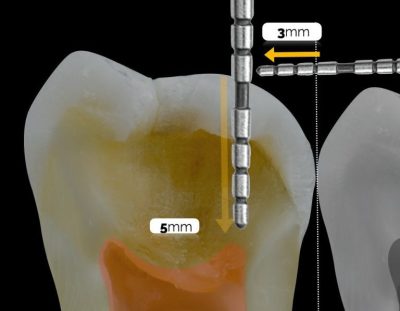
Step 2: Selective Caries Removal .

•Using high magnification and caries-detecting dye, only infected dentin is removed while remineralizable dentin is preserved.
•The procedure stops once all irreversibly damaged tissue is gone, keeping healthy dentin and enamel intact.

•This conserves pulp vitality and prepares the tooth for a durable, gap-free biomimetic restoration.
 
Step 2: Selective Caries Removal .
Step3: Surface Conditioning for Enhanced Bonding

Step 3: Surface Conditioning for Enhanced Bonding

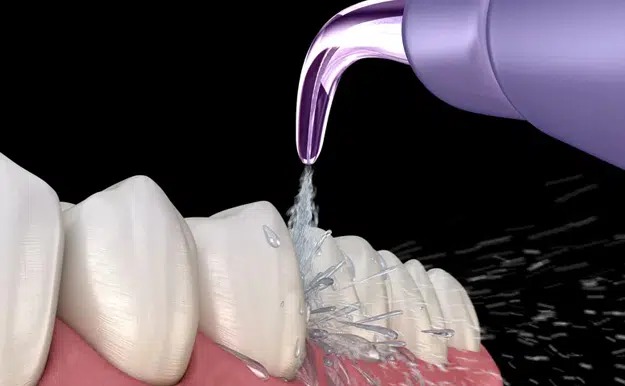
•Air abrasion is used to micro-roughen and condition the tooth surface
•This creates an ideal bonding architecture by increasing surface energy and surface area.
•The treated surface allows adhesive systems to penetrate more effectively, resulting in stronger, more durable biomimetic bonds

Step 4: Immediate Dentin Sealing

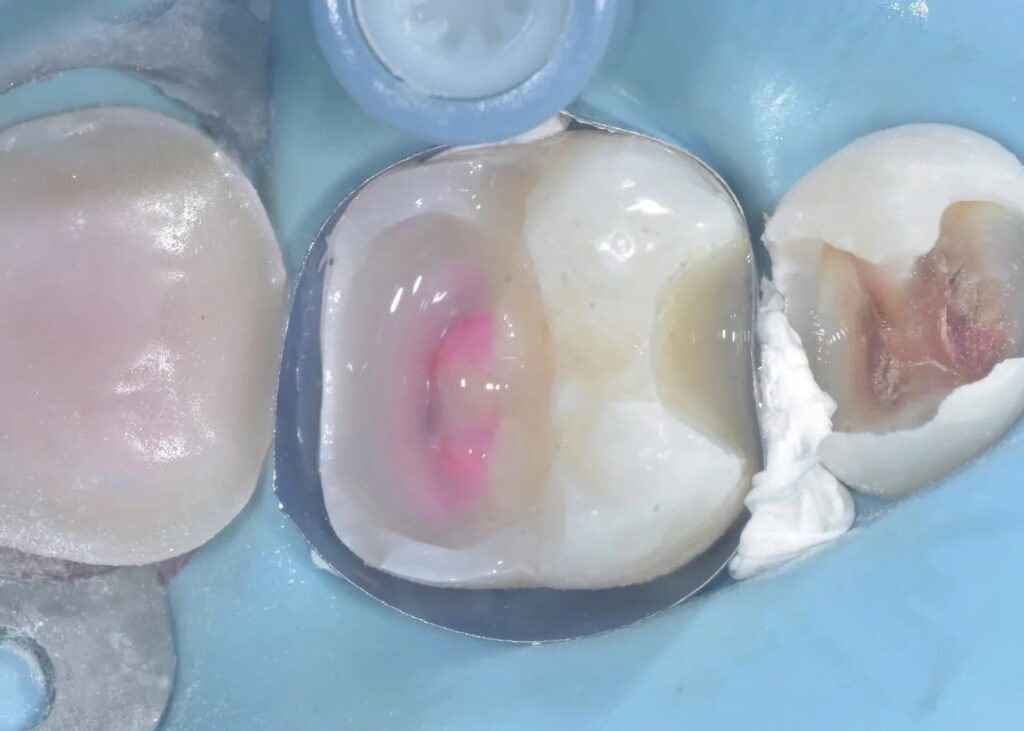
•Exposed dentin is sealed immediately after tooth preparation using biomimetic adhesive techniques.
•This protects the pulp, reduces post-treatment sensitivity, and strengthens the tooth internally.

•Immediate sealing creates an ideal foundation for long-term  success of indirect bonded restorations ( inlay onlays vonlays overlays veneers)
Step 4: Immediate Dentin Sealing
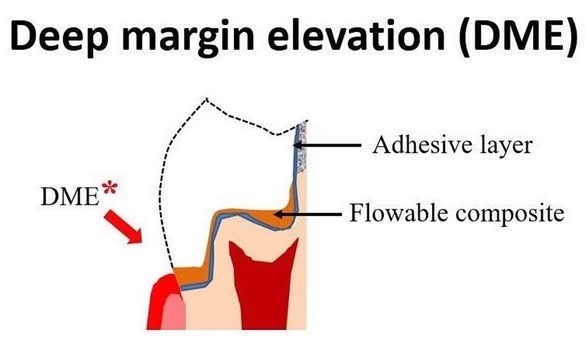
Step 5: Deep Margin Elevation.

Step 5: Deep Margin Elevation .

•When decay or defects extend below the gum line, the margin is conservatively raised to a clean, accessible level , self cleansable area using bonded biomimetic materials.

•Margin elevation allows the restoration margins to be repositioned above the gum line, making them more accessible and hygienic. This approach helps protect the surrounding gum and bone, supporting long-term periodontal (gum) health and restoration stability.
Step 6: Internal Reinforcement (Bio-Base Creation)

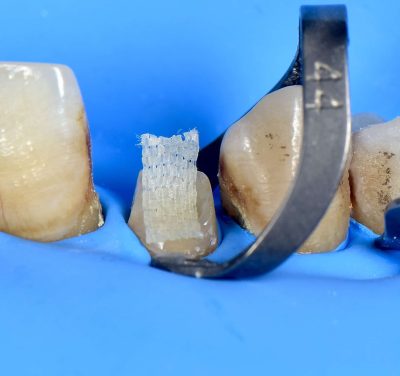
•The tooth is internally reinforced using layered biomimetic materials, sometimes supported with fiber reinforcement.
•These fibers act like an internal support framework, helping distribute chewing forces evenly within the tooth.
•Importantly, the fibers also compensate for the natural polymerization shrinkage of composite materials as they set, reducing internal stress at the bonded interface.
•This creates a strong, well-bonded foundation that protects the tooth structure and significantly lowers the risk of catastrophic failures.
Step 6: Internal Reinforcement (Bio-Base Creation)
Step 7: Final Restoration Placement

Step 7: Final Restoration Placement

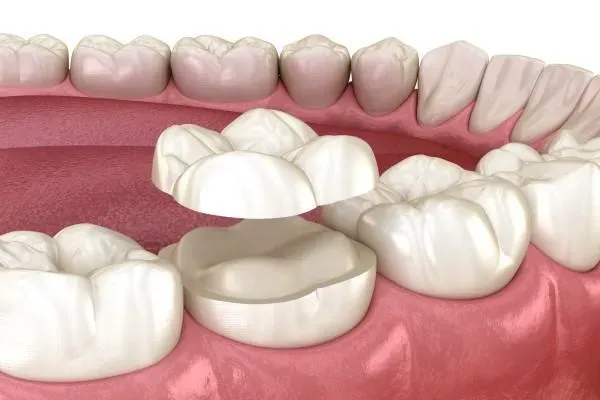
  • Depending on the extent of damage, a bonded ceramic or resin restoration (inlay, onlay, overlay) is placed over the reinforced base.
    This restores natural shape, strength, and aesthetics while minimising stress on the remaining tooth

Summary 

Biomimetic Dentistry follows two key protocol groups


1️⃣ Stress-Reducing Protocols

(Aim: protect the tooth from cracks, pain, and failure)
•Use indirect or semi-direct restorations (inlays/onlays) to reduce shrinkage stress
•Small, thin composite layers (≤1 mm) instead of bulk filling
•Time-decoupling: allow the bond to mature before loading it with stress
•Slow or soft-start curing to reduce polymerization pull
•Use low-shrinkage, dentin-like composites
•Fiber reinforcement in deep or large cavities
•Preserve cusps and avoid over-cutting
•Design restorations to direct forces vertically, not sideways
 

2️⃣ Bond-Maximizing Protocols

(Aim: create a strong, long-lasting seal like a natural tooth)
•Create a caries-free peripheral seal zone
•Immediate dentin sealing (IDS) after tooth preparation
•Resin coating over sealed dentin for protection and strength
•Air abrasion before bonding for better adhesion
•Deactivate collagen-breaking enzymes (MMPs)
•Use gold-standard bonding systems
•Bevel enamel to improve enamel bond
•Deep margin elevation to bring margins above the gum line

FAQ's for Biomimetric Dentistry​

1. Are biomimetic restorations long-lasting?

When done correctly and maintained with good oral hygiene, biomimetic restorations are designed to be durable and long-lasting. By protecting the remaining natural tooth structure, they often outperform conventional restorations over time.

2. Will a biomimetic restoration look natural?

Yes. These restorations are designed to closely match the colour, shape, and translucency of natural teeth, making them highly aesthetic and virtually invisible.

3. What kind of guarantee comes with a biomimetic restoration?

While no dental treatment can come with a lifetime guarantee, biomimetic restorations are placed following strict protocols and evidence-based techniques. At Zen Dental Studio, we stand by the quality of our work and provide guidance on care and maintenance to ensure long-term success.

4. Why does Zen Dental Studio focus on biomimetic dentistry?

We believe dentistry should respect nature. Our goal is not just to treat teeth, but to preserve them—using techniques that support natural strength, function, and longevity.

5. How is a biomimetic restoration different from a regular filling?

Traditional fillings often replace damaged tooth structure but may not fully restore how a natural tooth flexes and handles chewing forces. Biomimetic restorations use advanced adhesive techniques and layered materials to strengthen the tooth from within, reduce cracks, and improve longevity.

6. Why We Prefer Onlays & Overlays Over Crowns
Instead of cutting down the entire tooth for a crown, biomimetic dentistry allows us to:
•Preserve healthy tooth structure
•Replace only weakened or damaged areas
•Reduce the risk of fractures
•Maintain long-term tooth vitality
7. What are the benefits of biomimetic dentistry?
• Preserves maximum natural tooth structure
•Saves teeth that may otherwise need crowns, root canals or extraction
•Strengthens teeth using materials that mimic natural tooth structure
•Seals the tooth against bacteria and prevents future decay
•Helps delay the “tooth-death cycle”
•Minimal to no post-treatment sensitivity
•Restores natural flexibility and chewing function
•Long-lasting restorations with proven success
•. May Costs more initially, but is cost-effective over a lifetime

FAQ's for Biomimetric Dentistry​

1. Is biomimetic dentistry an investment worth making?

Yes, it is because it aims at preserving the natural structure and strength of the teeth. This is a great way to make the teeth stronger and healthier.

2. What Does Biomimetic Treatment Entail?

Biomimetic treatment entails the restoration of teeth in a manner that imitates nature. This is achieved through advanced bonding methods that make the tooth stronger.

3. What are the disadvantages of biomimetic dentistry?

It may take longer to perform compared to other dental procedures. The process is also very sensitive and may be more expensive.

4. Is biomimetic dentistry superior to crowns?

Biomimetic dentistry is superior to crowns because it preserves more of the natural tooth structure. This process also ensures that the tooth is flexible and will not fracture.

5. Can biomimetic dentistry save a cracked tooth?

Yes, it is capable of reinforcing and bonding a cracked tooth using strong adhesive materials.

Reviews

I took my 3 year old daughter to Zen Dental Studio for a check up because she had many cavities At another clinic we were told she would need several filling which worried me because she is so young.

Dr. Roopa checked her teeth carefully and suggested a more conservative option instead of drilling all the teeth.The clinic has a small play area and during the treatment my daughter was watching cartoons on the TV above which kept her calm.I’m happy we chose Zen Dental Studio for her treatment. Highly recommended for kids' treatment.

C. Greeks

Want to embrace a confident new look?

Consult a smile design specialist today to learn how this transformative treatment can benefit you!